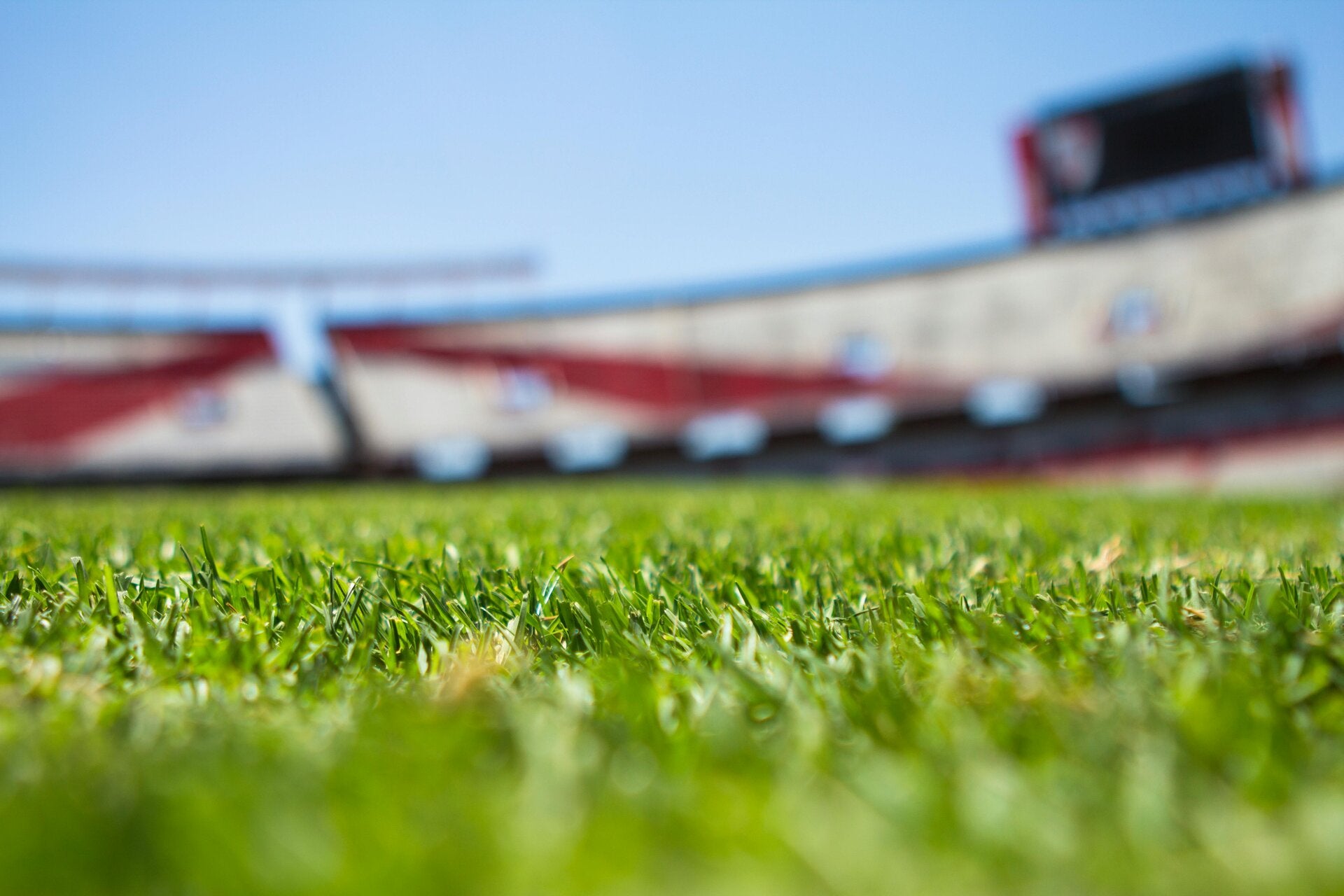
A pitch of excellence

A DIFFERENT SOLUTION FOR EVERY LAWN

Artificial lighting plays a key role in the growth of natural lawns, ensuring the right conditions for plants to fulfill their daily energy needs, regardless of their location, installation conditions and use. Under normal conditions and whenever possible, this lighting is used to complement natural light, reducing energy and environmental costs.

The choice of the most appropriate solution will depend on the specifics of each project, always focusing on the quality of the lawns and their sustainability.

Customized energy

Many top-level sporting activities take place on natural grass pitches. In view of the widespread growth that has taken place in recent years, there has been a need to improve the quality of the service provided, allowing better conditions of use for all players and viewing for both spectators in the stadium and those watching at home on television.

The various bodies that oversee sport at global level are naturally aware of this phenomenon and have been making efforts to standardize and control the quality of natural turf, the results of which are published in the various applicable regulations.

Although there are various environmental factors that influence plant growth, such as temperature, humidity and soil conductivity, almost all of the plant's needs come from light. Light is therefore the key factor, which is why the careful study and design of a solution suited to the real needs of plants is fundamental to the success of any project.

In addition to the energy levels required, the level of uniformity, spectral quality, photoperiod and respect for the plants' biological rhythm are also decisive in obtaining an excellent quality natural lawn.

PPF(D) - Photosynthetic Photon Flux (Density) (umol/s,umol/s/m2)

The level of photosynthetic flux emitted by the artificial lighting system directly influences plant growth. The greater the amount of energy captured and accumulated, the greater and better the growth. However, there is a limit to the rate of energy that can be absorbed by plants, after which they enter saturation, no longer absorbing more energy and, worse still, spending additional resources in the process. In extreme situations, plants can enter a process of degradation due to oxidation of the chlorophylls.

Clearly identifying the applicable saturation levels is therefore fundamental to finding the best compromise between growth and profitability. These limits vary from plant to plant.

DLI - Daily Light Integral (mol/D/m2)

The amount of energy accumulated by plants over a 24-hour period (photobiological rhythm) dictates the conditions for their growth and development. The higher its value, the greater the amount of energy available for all the necessary photobiological processes, and therefore the greater and better their growth. However, there are limits beyond which plants will activate rejection mechanisms, consuming precious resources in addition to the resulting energy waste. On the other hand, if the level of accumulated energy is not sufficient, the plants will not be able to develop properly.

The daily energy levels required vary from plant to plant and are strongly dependent on environmental factors such as temperature and humidity. Clearly identifying these levels is fundamental to finding the best compromise between growth and profitability.

Spectral quality

The spectral quality of a light source is one of the fundamental factors in the plant growth process, an indicator of how the emitted energy is distributed in the photosynthetic active region (PAR). The more complete the spectrum, the better for plants to be able to carry out the different tasks required, but the worse for the efficiency of the process. In fact, since not all plants have the same requirements, the more the emitted spectrum is adjusted to the absorption curve of the applicable type and growth stage, the greater this efficiency will be, reducing costs and environmental impact. The combination of quantity and quality factors dictates the effective value of the lighting solution provided.

In the case of natural lawns, the photosynthetic process is central to their growth, since this is limited to the vegetative phase. There are other secondary processes involved, albeit with much lower energy requirements. Lighting systems should be designed to maximise the energy captured in the photosynthetic absorption regions. More than that, they must ensure the right spectral ratio to meet the requirements of a high-performance lawn, particularly in terms of rooting, plant density, leaf density, stem height and colour.

Photoperiod

In the case of natural lawns, the photoperiod varies greatly depending on the type of plant used. Plants that have developed naturally at higher latitudes are prepared to work with less sun exposure and therefore shorter photoperiods. On the other hand, plants from more southerly regions (northern hemisphere) are used to longer photoperiods. Given the great adaptability of these plants, the number of hours of exposure is actually quite flexible and wide-ranging, allowing for enormous versatility in the use of artificial lighting systems.

Despite this, it is necessary to respect a maximum number of hours of exposure to artificial lighting, so that the plants can carry out the different tasks that are essential for their growth and that only take place at night, i.e. during the almost total, or even total, absence of light. If this rest period is not respected, the plants will struggle and this will lead to their degradation and, ultimately, death.

The photoperiod depends on the photosynthetic flux density and the DLI, since once the daily energy objectives have been reached, the artificial lighting system can be switched off, reducing energy and environmental costs. It is necessary to study and identify the most suitable photoperiod value, which varies from plant to plant.

Cyrcadian rythm

Controlling the photobiological rhythm of plants is fundamental to regulating their internal functioning. This rhythm is naturally imposed by the length of the solar day, more specifically by the sequence of day and night. It is essential to control this rhythm, respecting the planned photoperiod, otherwise the plants will struggle, degrade and ultimately die.

In the case of natural lawns, this situation is no exception, leading to the weakening of the plants' roots, leaves and stems in stressful situations.

High quality turf

A top-quality natural turf is essential for top-level sports, not only improving the quality of play but also reducing potential injuries.

A turf with these characteristics results from the combination of several factors:

  • Homogeneous plant height for a smooth, even cut
  • Large leaves for excellent density, homogeneity and cushioning
  • Thick leaves for greater and better resistance to trampling
  • Uniform, dark green leaves for a lawn with a healthy, uniform colour
  • Stem with a good thickness for a strong, trample-resistant plane
  • Roots with high density and depth for high tensile strength
  • High plant density for even coverage and cushioning

Our solutions

Aware of the growing demands in this sector and leveraging several years of research and accumulated experience in this area, our company has developed a set of excellent solutions and services for the growth of natural turf for top-level sports, including the possibility of television broadcasting, meeting all the necessary requirements regardless of the level of service required.

We use high-efficiency, high-quality LED technology, ensuring that the necessary energy is supplied in a long-lasting and economical way, even in adverse conditions.

Products and services

Explore everything we have to offer.

Areas of use

Football

Rugby

Tennis

Golf